All lessons Day 1
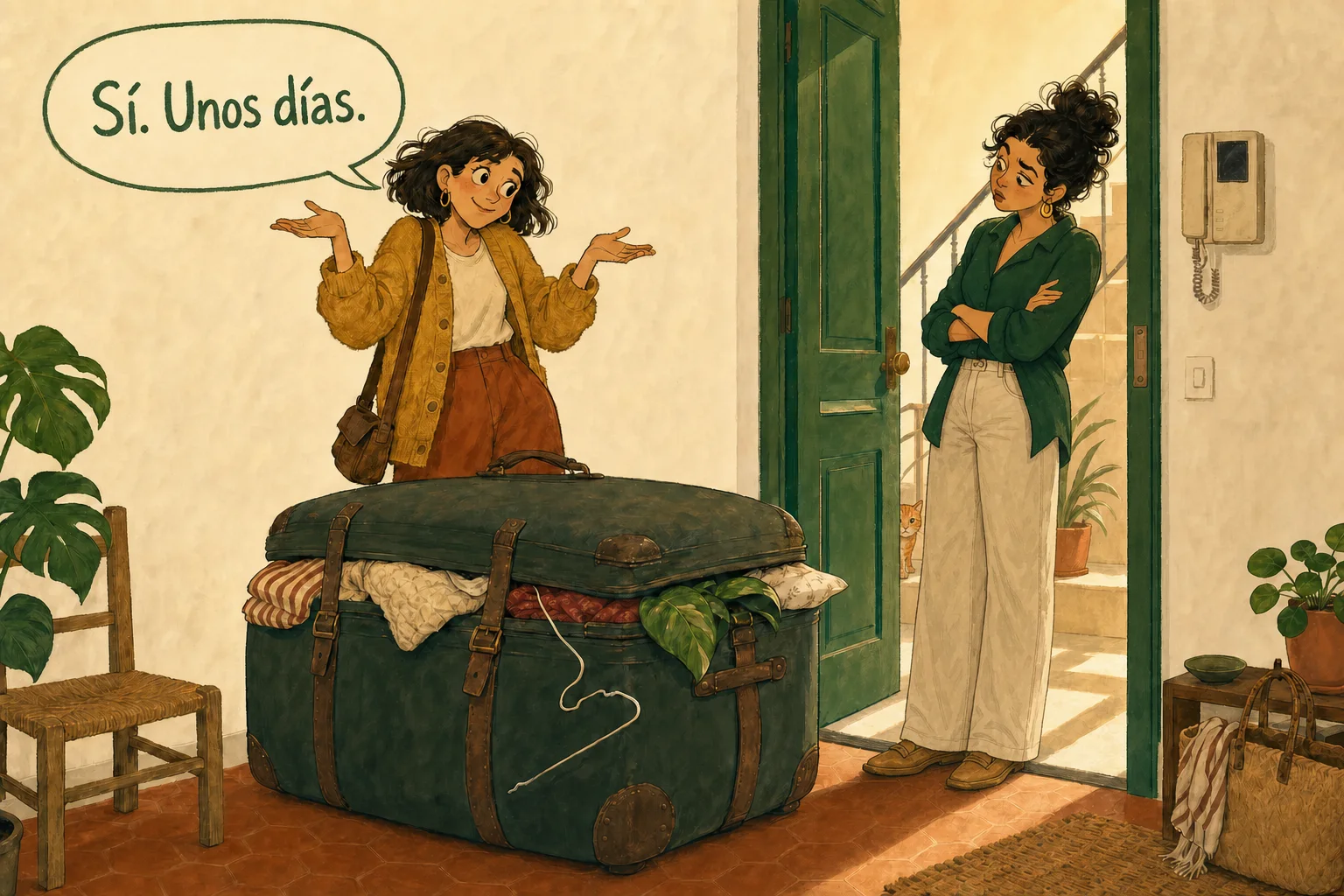
Unos días · A few days Marta arrives at Lucía’s flat with one suitcase and an answer that nobody quite believes.
Lucía ¿Sí? ¿Quién es? Yes? Who is it?
Marta ¡Hola! Soy Marta. Hi! It’s Marta.
Lucía ¡Marta! ¡Sube, sube! Marta! Come up, come up!
Lucía ¡Bienvenida! ¿Qué tal? Welcome! How are you?
Marta Gracias. Bien… ¿Y tú? Thanks. Good… And you?
Lucía ¡Muy bien! Pasa, pasa… ¿Solo una maleta? Really good! Come in, come in… Just one suitcase?
Marta Sí… Unos días. Yeah. Just a few days.
Los dos besos · The two kisses Marta and Lucía are close friends, so when Marta comes inside they greet with dos besos : two light cheek kisses accompanied by a kissing sound.
This is a common informal greeting in Spain, especially between two women or between a woman and a man. A handshake is more usual in professional situations. If you are unsure, pause and follow the other person’s lead.
Day 2
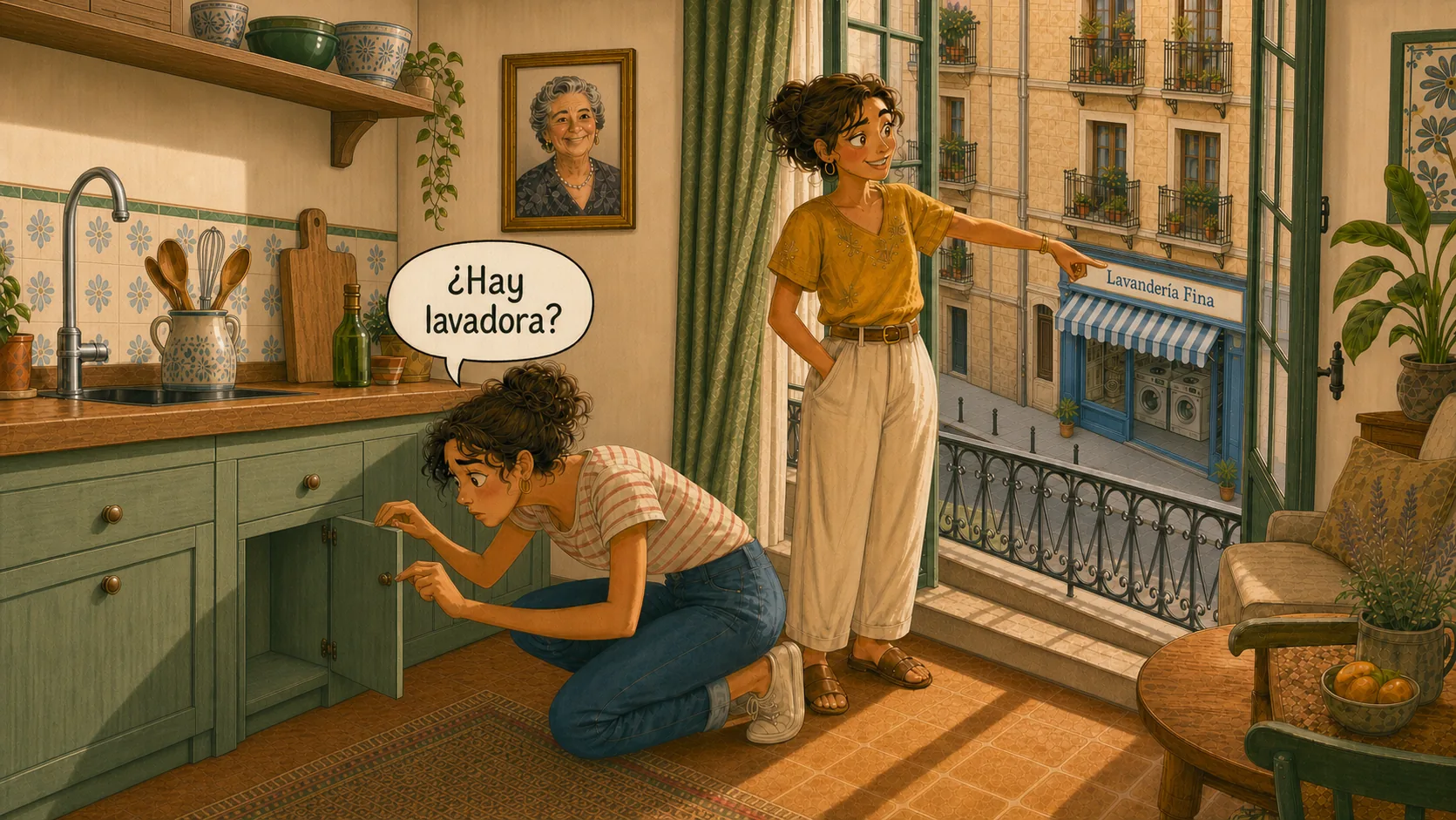
El piso · The flat Lucía shows Marta her room, a family photograph and the laundromat downstairs.
Lucía Esta es tu habitación. This is your room.
Marta ¡Qué bonita! ¿Y esa foto? It’s so pretty! And that photo?
Lucía Es mi abuela Fina. That’s my grandmother, Fina.
Marta Ah… ¿Y la cocina? Ah… And the kitchen?
Lucía Aquí. El baño también. Here. The bathroom too.
Marta Vale. ¿Hay lavadora? OK. Is there a washing machine?
Lucía No, pero abajo hay una lavandería: Lavandería Fina. No, but downstairs there’s a laundromat: Lavandería Fina.
Marta Fina… como tu abuela. Fina… like your grandmother.
A flat tells you its age During Spain’s rapid urban growth from the 1960s onward, enormous numbers of new flats had to be finished quickly and affordably. Details left from that period can still make an older home instantly recognizable.
One of them is el gotelé : thick paint sprayed in fine droplets. A smooth wall needs careful plastering because light reveals every bump; gotelé hides small imperfections, so builders could finish walls faster and spend less on making them perfectly even.
Today many people remove it for a smoother look, but quitar el gotelé can be slow and messy because the wall underneath may need levelling again. The texture is a small piece of Spain’s housing history still visible inside an ordinary home.
Day 3
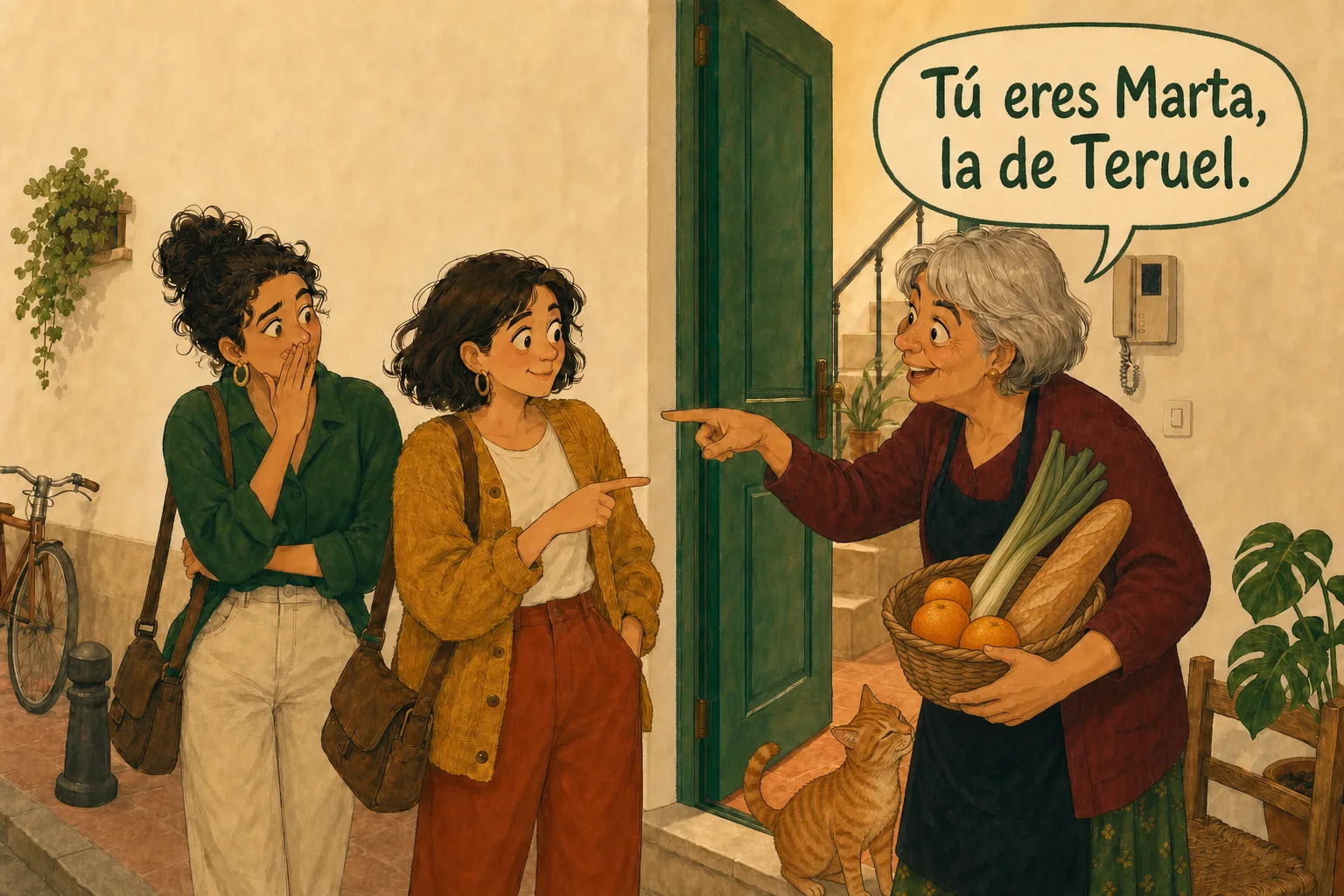
Abajo · Downstairs A neighbor already knows Marta by name, which says plenty about Lucía and the neighborhood.
Amparo Tú eres Marta, la de Teruel. You’re Marta, the one from Teruel.
Marta Sí… ¿Cómo sabes mi nombre? Yes… How do you know my name?
Amparo Lucía habla mucho. Lucía talks a lot.
Lucía ¡Amparo! Esta es mi amiga Marta. Amparo! This is my friend Marta.
Amparo Encantada, Marta. Nice to meet you, Marta.
Marta Encantada. ¿De dónde eres? Nice to meet you. Where are you from?
Amparo Soy de aquí, de Benimaclet. I’m from here, from Benimaclet.
Marta Ah… Tú eres la de aquí. Ah… You’re the one from here.
«La de Teruel» y «mi pueblo» · “The one from Teruel” and “my hometown” A person’s answer about where they are from does not always match where they were born or currently live.
For many families in Spain, mi pueblo may be the village or town their parents or grandparents came from. The phrase can carry family memories and belonging passed between generations.
Day 4
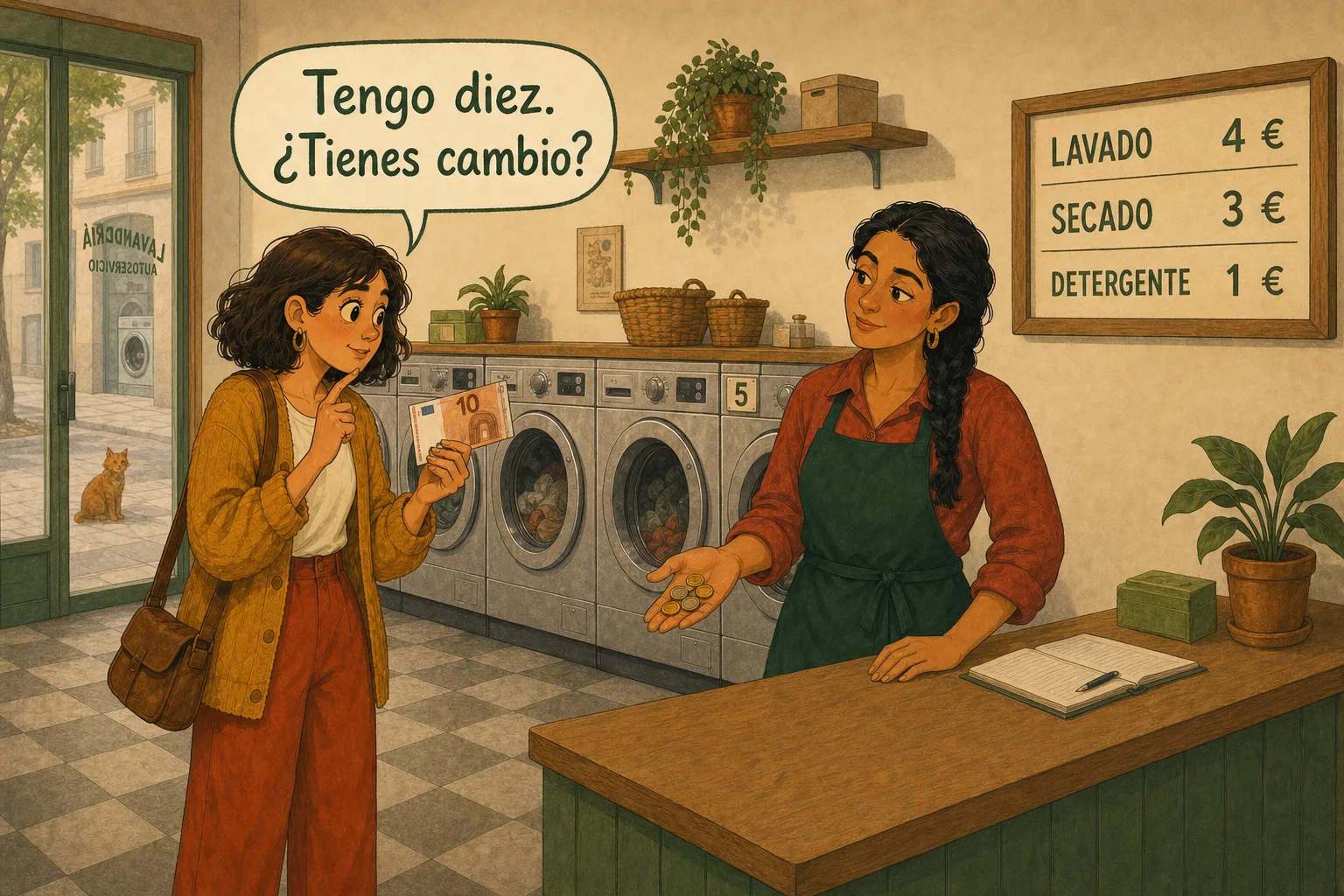
La cinco · Number five Marta meets Yolanda, pays for a wash and is introduced to machine number five.
Yolanda Hola. Soy Yolanda. ¿Tú eres Marta? Hi. I’m Yolanda. Are you Marta?
Marta Sí, la de Teruel. Quiero lavar la ropa. Yes, the one from Teruel. I want to wash my clothes.
Yolanda La cinco está libre. Number five is available.
Marta ¿Cuánto es? How much is it?
Yolanda Cuatro euros. Four euros.
Marta Tengo diez. ¿Tienes cambio? I have ten. Do you have change?
Yolanda Sí. Aquí tienes: seis euros. Yes. Here you go: six euros.
Marta Gracias. Thank you.
Yolanda De nada, Marta. You’re welcome, Marta.
Dinero, cambio y pasta · Money, change and cash Dinero is the neutral word for money. In casual conversation in Spain, pasta can also mean money.
Cambio can mean smaller coins or notes, or the money returned after a payment. Spanish prices use a comma: 4,50 €.
Day 5
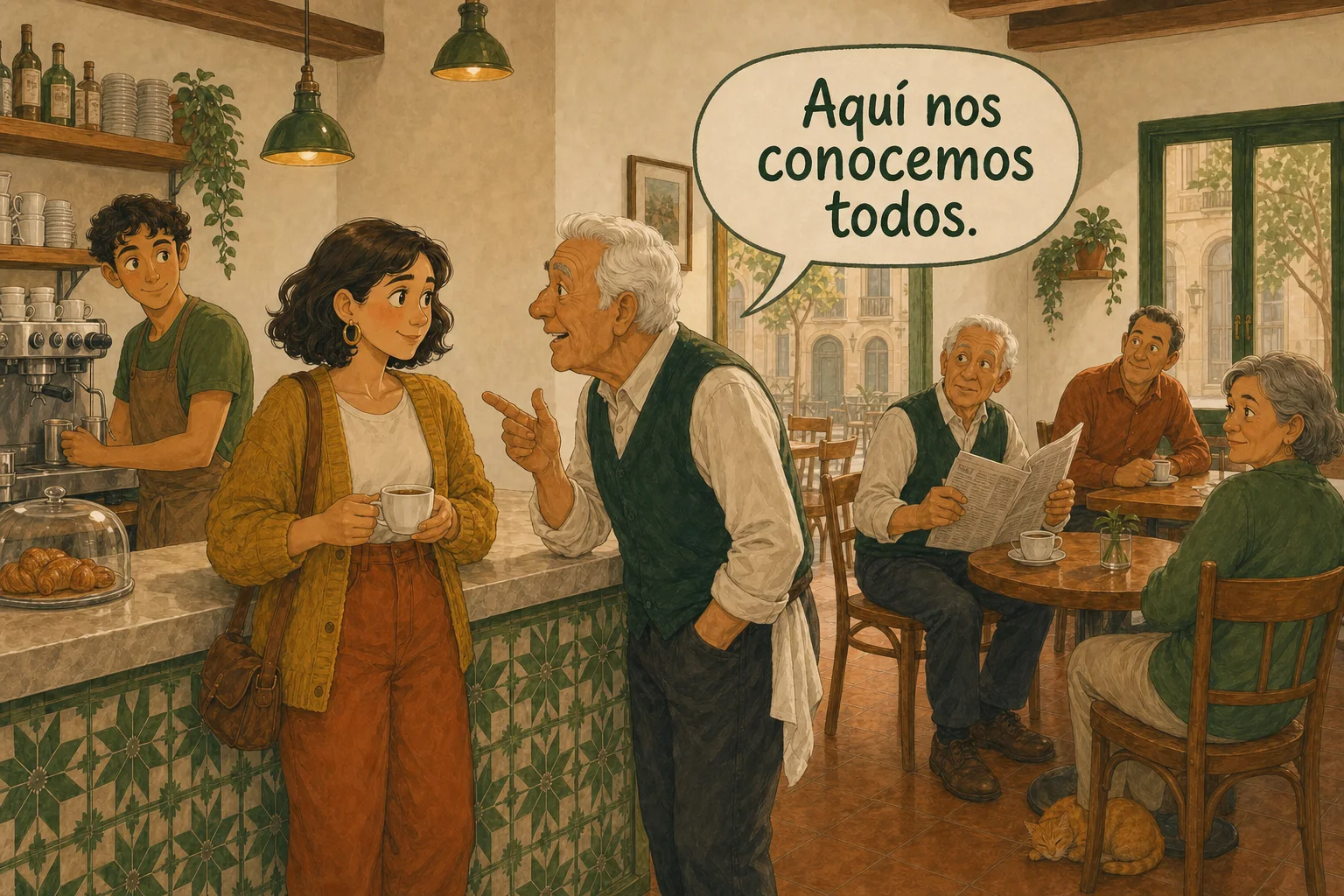
Un café · A coffee A simple coffee order turns into proof that everyone in Benimaclet already knows Marta.
Camarera Hola. ¿Qué te pongo? Hi. What can I get you?
Marta Un café con leche, por favor. ¿Cuánto es? A coffee with milk, please. How much is it?
Camarera Dos euros. Aquí tienes. Two euros. Here you are.
Emilio Usted es la del piso de Fina. You’re the one from Fina’s flat.
Marta Sí… ¿Nos conocemos? Yes… Do we know each other?
Emilio No. Soy Emilio. Aquí nos conocemos todos. No. I’m Emilio. Everyone knows everyone here.
Marta Entonces sí nos conocemos. Then we do know each other.
La barra del bar · The bar counter La barra is the counter where drinks and food are served. Customers may order there or at a table, and payment may happen immediately or at the end.
For a small order, ¿Cuánto es? is enough. At a table, la cuenta, por favor is useful. Tips are optional rather than a required percentage.
Day 6
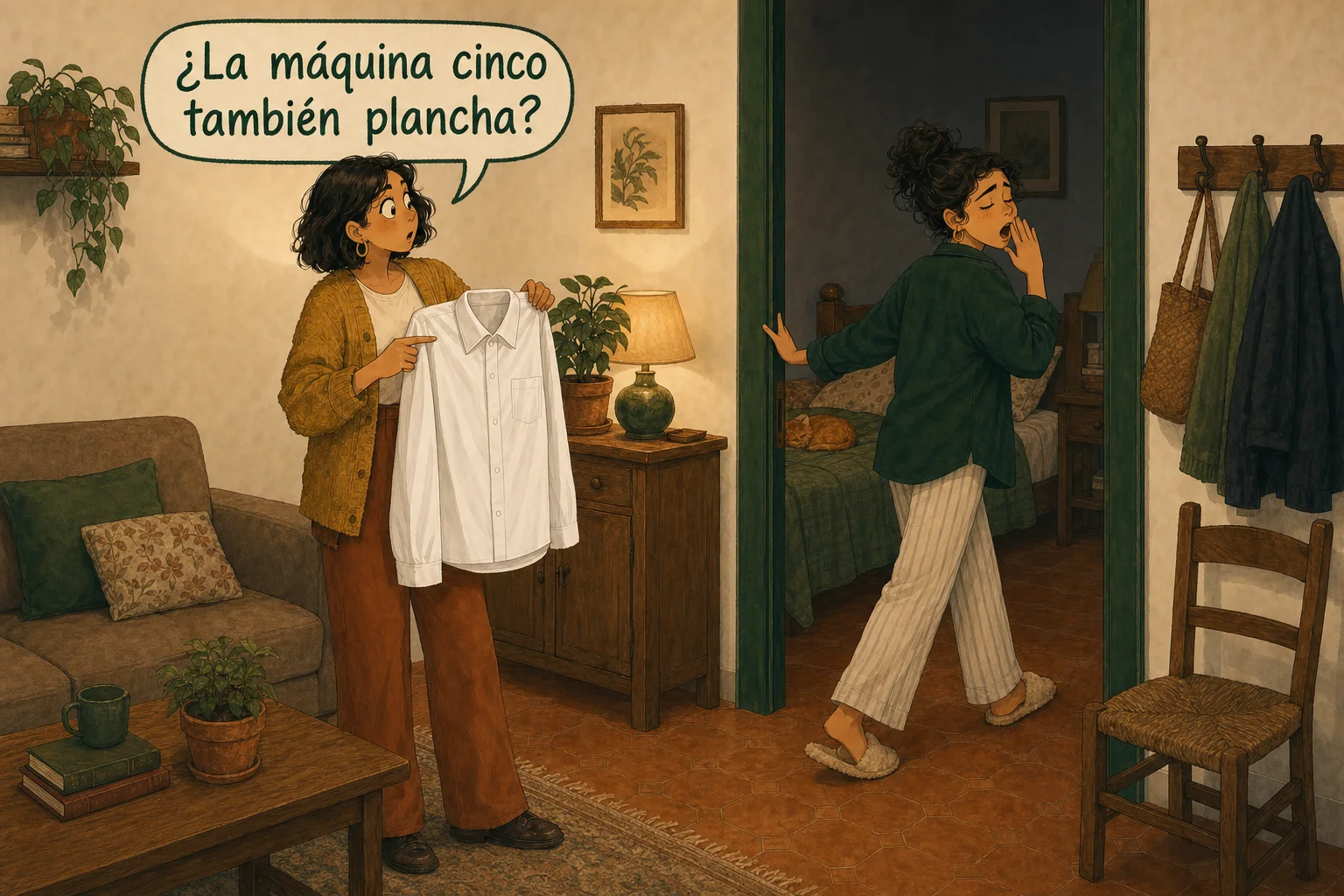
La víspera · The night before A suspiciously perfect shirt raises one question about machine five that Lucía avoids answering.
Lucía ¿A qué hora empiezas a trabajar mañana? What time do you start work tomorrow?
Marta A las ocho. Tengo sueño. At eight. I’m sleepy.
Lucía ¿Tienes lista la camisa? Do you have the shirt ready?
Marta Sí. Está limpia y doblada. Yes. It’s clean and folded.
Lucía Y planchada. And ironed.
Marta ¿La máquina cinco también plancha? Does machine five iron too?
Lucía No. No.
Marta Entonces… Then…
Lucía Tengo sueño. Buenas noches, Marta. I’m sleepy. Good night, Marta.
Los horarios de las comidas · Spanish mealtimes In Spain, lunch and dinner are often later than many visitors expect. Restaurants commonly serve lunch around 13:00–16:00 and dinner around 20:00–22:30.
Those are typical service hours, not a rule for every household. When staying with someone, ask ¿A qué hora cenamos? (What time do we have dinner?)
Day 7
Audio para mamá · A voice note for Mum The week closes with review, a call home and the same quiet answer with which it began.
Mamá Hola, Marta. ¿Qué tal? Hi, Marta. How are you?
Marta Muy bien. ¿Y tú? Really good. And you?
Mamá Bien. ¿Y tu habitación? Good. And your room?
Marta Es bonita. It’s pretty.
Mamá ¿Hay lavadora? Is there a washing machine?
Marta No, pero abajo hay una lavandería. No, but downstairs there’s a laundromat.
Mamá ¿Y Lucía? And Lucía?
Marta Lucía habla mucho. Lucía talks a lot.
Mamá ¿A qué hora empiezas a trabajar mañana? What time do you start work tomorrow?
Marta A las ocho. Tengo sueño. At eight. I’m sleepy.
Mamá Marta… ¿Unos días? Marta… A few days?
Marta Sí. Unos días. Yes. A few days.
You have completed your first week. You can greet someone, introduce yourself and another person, talk about where you are from, ask about a home, handle a simple payment, order a coffee and ask about a schedule.
The goal was not to memorize a grammar list. It was to recognize familiar Spanish, connect its patterns and use it again in a new conversation.
The phrases from this chapter The story continues in the cohort Weeks 2–4 open one lesson each morning, with your review deck and the second wave.
See the cohort